
Nutrient compendium
Zinc Gluconate, Chromium Picolinate, Alpha-Lipoic Acid and Seven Botanical Ingredients: Forms, Markers and Absorption Research
This compendium describes the ten ingredients declared for Corevalin, a once-daily capsule taken with breakfast. For each one it explains what the substance is, which chemical form or plant part is used and what a marker percentage on a label refers to. Product details are available at the Corevalin Official US Shop, and the bundle options are listed under Corevalin Bundles and Pricing.
Every entry cites one published paper, chosen because it addresses a question a label reader has: the form of a mineral, the composition of an extract or how absorption is measured. The papers examine single ingredients in their own preparations and amounts, in people, in animals or in laboratory systems, and none of them tested Corevalin as a finished product.
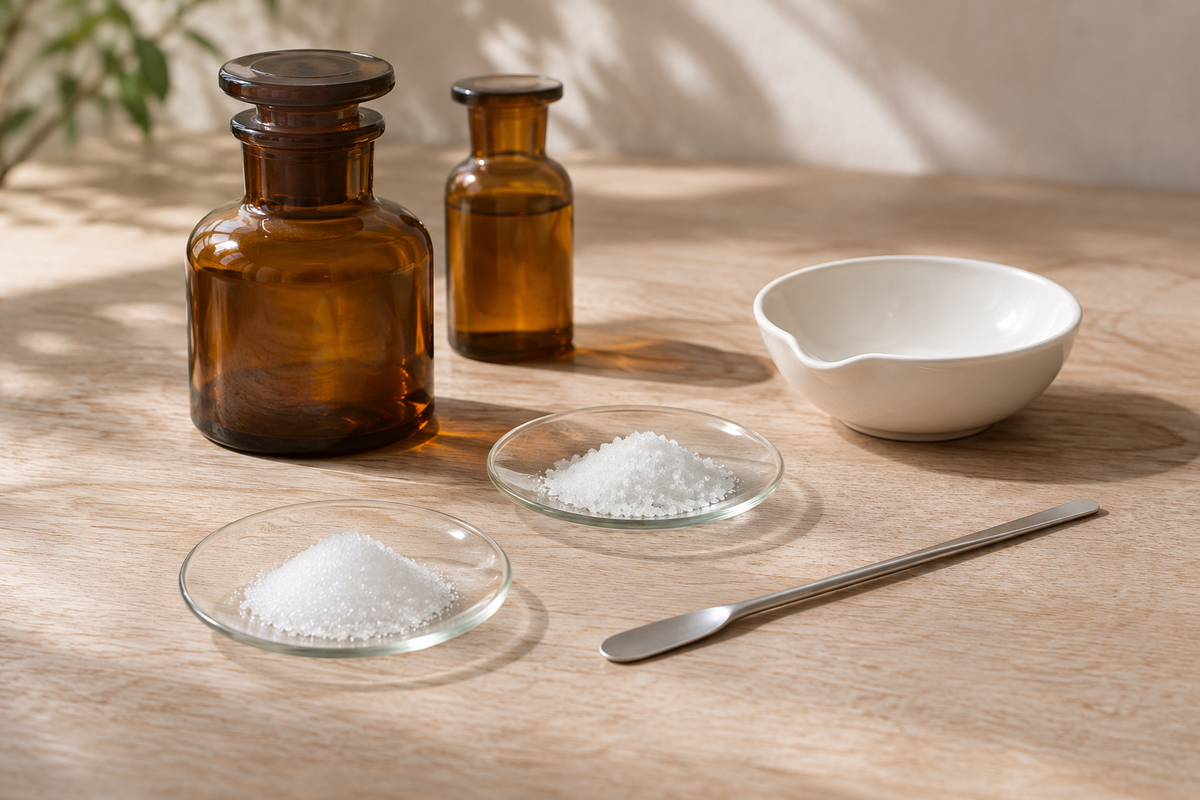
Zinc as zinc gluconate (5.5 mg): elemental amount, compound and human absorption
Zinc in a supplement is bound to a partner molecule, and the label accounts for both. The amount refers to the zinc itself, called elemental zinc, and the name in parentheses identifies the compound that carries it. In Corevalin that compound is zinc gluconate, the salt of zinc with gluconic acid, and the declared amount corresponds to 50% of the US Daily Value.
A narrative review in the journal Nutrients (Devarshi and colleagues, 2024) compared human studies on the absorption and bioavailability of different zinc compounds. The authors conclude that the clinical evidence suggests zinc glycinate and zinc gluconate are better absorbed than other forms of zinc. The review summarizes trials with different doses and designs and did not examine a combination capsule.
Source: Comparative Absorption and Bioavailability of Various Chemical Forms of Zinc in Humans: A Narrative Review. PMID 39770891.
Trivalent chromium as chromium picolinate (50 mcg): chemical form and reference intake systems
Chromium exists in several chemical forms. The one found in food and in supplements is trivalent chromium, and chromium picolinate is trivalent chromium bound to picolinic acid. Reference systems treat the mineral differently. US labeling uses an FDA Daily Value of 35 mcg, so the declared amount reads as 143% DV. The EU labeling reference of 40 mcg would give 125% for the same amount.
A scoping review prepared for the Nordic Nutrition Recommendations (Henriksen and Bügel, Food & Nutrition Research, 2023) describes trivalent chromium as the principal form in diet and supplements. It reports that methods for assessing chromium status are lacking and that the question of essentiality is disputed, and it found no strong evidence on which to base a Nordic intake recommendation. A percentage for chromium therefore always depends on the labeling system applied.
Source: Chromium - a scoping review for Nordic Nutrition Recommendations 2023. PMID 38084146.
Alpha-lipoic acid (75 mg): mirror-image forms and plasma kinetics
Alpha-lipoic acid, also known as thioctic acid, is a sulfur-containing fatty acid. Its molecule exists in two mirror-image forms, R and S. Supplements contain either the R form or the racemic mixture of both, written R,S. Corevalin declares alpha-lipoic acid by name and amount, without a separate R or R,S designation. It is the one active in the formula that is neither a mineral nor a plant ingredient.
A pilot crossover study in Pharmacological Research (Keith and colleagues, 2012) gave young adults, average age 32, and older adults, average age 79, 500 mg of each form on separate occasions and sampled blood for three hours. Plasma levels varied much more among the older participants. Two of six older men reached higher levels with the R form, while young men tended toward higher values with the racemic mixture. The study also measured plasma glutathione, which did not change during the sampling period.
Source: Age and gender dependent bioavailability of R- and R,S-α-lipoic acid: a pilot study. PMID 22609537.
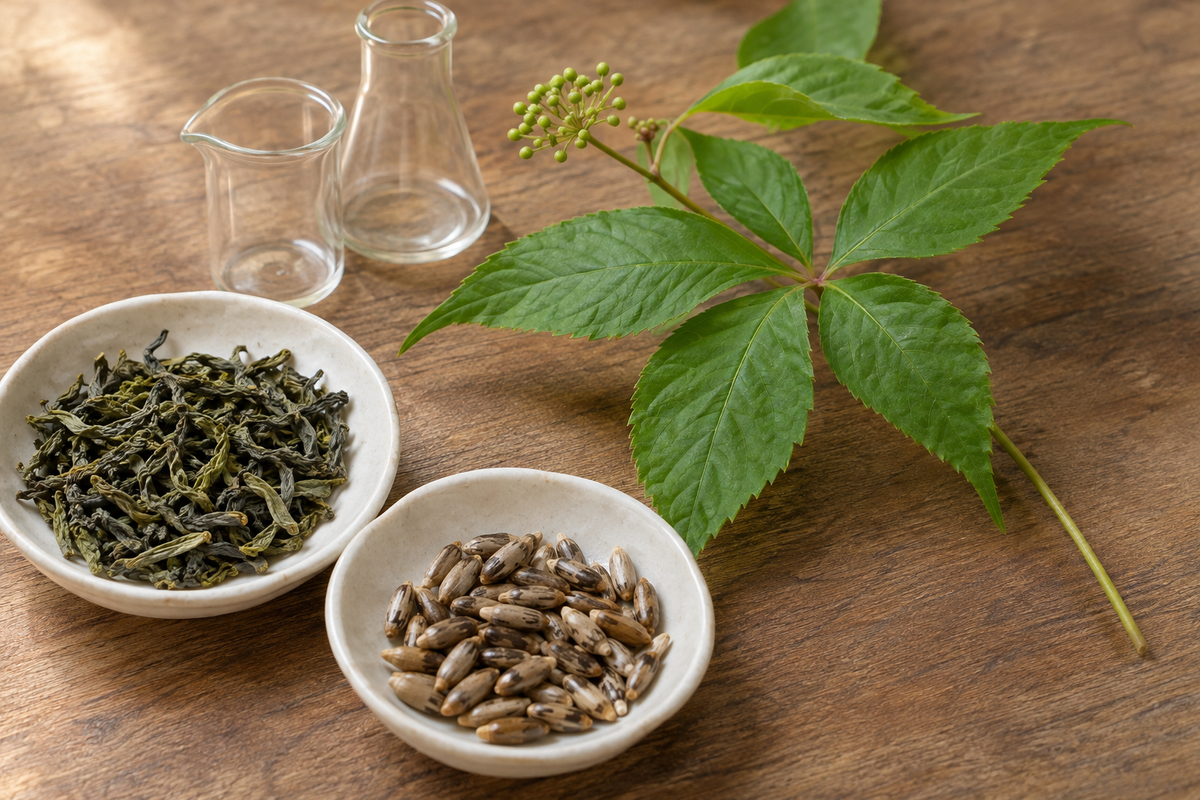
Green tea leaf extract (75 mg, 50% EGCG): catechins and how blood levels are measured
The leaves of the tea plant, Camellia sinensis, contain catechins, a family of polyphenols. EGCG, short for epigallocatechin gallate, is the principal one. Standardization to 50% EGCG, as declared for Corevalin, means that half of the extract is this compound. How much EGCG reaches the bloodstream depends on the preparation, which is why formulation studies measure it directly in plasma.
A randomized, double-blind crossover trial in Frontiers in Nutrition (Zhang and colleagues, 2026) gave 16 healthy adults a micellar green tea formulation with N-acetylcysteine at 330 mg and a standard formulation at 330 mg and 660 mg. Baseline-adjusted EGCG exposure was about four times higher with the micellar product than with the dose-matched standard. A separate 30-day open-label phase in 13 participants recorded no clinically significant adverse events for that formulation. The authors call for larger and longer studies, and the results apply to the delivery system they tested.
Source: Enhanced bioavailability and short-term safety of a micellar green tea extract formulation co-delivered with N-acetylcysteine: a randomized crossover study in healthy adults. PMID 42846898.
Milk thistle seed extract (50 mg, 80% silymarin): flavonolignans and their transformation by gut microbes
Silymarin is a mixture of related compounds called flavonolignans. They are found in the fruit of milk thistle, Silybum marianum, which the supplement trade calls the seed. Silybin A and silybin B are its two main members, and an extract labeled 80% silymarin is standardized to the group as a whole. Because flavonolignans are excreted largely through the gut, researchers study how intestinal microbes transform them.
A laboratory study in Phytochemistry (Pferschy-Wenzig and colleagues, 2023) incubated an equal mixture of silybin A and B, and separately silymarin, with a human fecal suspension from one donor for 24 hours without oxygen. Chemical analysis identified demethylated and ring-opened products along with smaller aromatic metabolites. The study characterizes chemistry in a laboratory system; no participants took the extract.
Source: Characterization of metabolites from milk thistle flavonolignans generated by human fecal microbiota. PMID 37648045.
Berberine HCl from Berberis aristata root (50 mg): an isoquinoline alkaloid and its plant source
Berberine belongs to the isoquinoline alkaloids, a class of nitrogen-containing plant compounds. Berberis aristata, known as Indian barberry, is a shrub of the barberry family native to the Indian Peninsula, and berberine is the principal alkaloid in the plant. Corevalin declares berberine as the hydrochloride salt obtained from the root, with a stated berberine content of 97%.
A review in Fitoterapia (Marchelak and colleagues, 2025) summarizes the botany, phytochemistry and pharmacokinetics of the species and the ways its preparations are characterized. Much of the clinical literature it surveys concerns combination preparations, and the authors ask for further studies of single-ingredient preparations and a complete phytochemical profile. The review is cited here for plant identity and chemistry.
Source: Berberis aristata DC. (Indian barberry): Current insight into botanical, phytochemical, and pharmacological aspects, pharmacokinetics, safety of use and modern therapeutic applications. PMID 40239774.
Resveratrol from Polygonum cuspidatum root (20 mg): a stilbene and the role of the delivery system
Resveratrol is a stilbene, a small polyphenol produced by several plants. The source declared for this ingredient is the root extract of Polygonum cuspidatum, and the stated amount is that of resveratrol itself. How much resveratrol is taken up after swallowing depends on the delivery system, so researchers compare formulations by measuring the compound in blood after a single serving.
A randomized crossover study in Molecular Nutrition & Food Research (Calvo-Castro and colleagues, 2018) gave 12 healthy volunteers a single 500 mg serving of a grapevine-shoot extract, which supplied 30 mg of trans-resveratrol, once as native powder and once as liquid micelles. Over 24 hours the plasma exposure to trans-resveratrol was about five times higher with the micelles, and the peak concentration about ten times higher. The material came from grapevine shoots, a different plant source from the root extract declared here, and the paper specifies the trans form of the molecule.
Source: The Oral Bioavailability of Trans-Resveratrol from a Grapevine-Shoot Extract in Healthy Humans is Significantly Increased by Micellar Solubilization. PMID 29534330.
Cayenne fruit (2.5 mg, 40,000 H.U.): capsaicinoids and what a heat rating describes
Cayenne is the dried fruit of Capsicum annuum. Its pungency comes from capsaicinoids, the group of compounds responsible for the spicy flavor of chili peppers. A heat-unit figure, such as the 40,000 H.U. declared for Corevalin, rates that pungency in the raw material. It is a quality description of the ingredient and does not measure an effect in the body.
An analytical review in Critical Reviews in Analytical Chemistry (Cheng and colleagues, 2024) surveys how capsaicinoids are extracted from food samples and quantified. It covers liquid- and solid-phase extraction, liquid and gas chromatography, electrochemical sensors and capillary electrophoresis, and compares the strengths and weaknesses of each method. Measurements of this kind are how the capsaicinoid content behind a heat rating is determined.
Source: Capsaicinoids in Food: An Update on Pretreatment and Analysis Methods since 2010. PMID 35320052.
Korean ginseng aerial extract (2.5 mg, 8% ginsenosides): saponins and dissolution research
Ginsenosides are triterpene saponins, the characteristic compounds of Panax ginseng. The declared ingredient is an extract of the plant's aerial parts, meaning the growth above ground, standardized to 8% ginsenosides. Researchers distinguish two main families of ginsenosides, the protopanaxadiol and protopanaxatriol types, and study how processing affects their release from the plant material.
A study in Food & Function (Liu and colleagues, 2022) milled ginseng powder to fine and ultrafine particle sizes, added beta-cyclodextrin as a dispersant to one ultrafine preparation and measured dissolution in the laboratory. The preparation with the dispersant released about 17% more ginsenosides than coarse powder. In rats, the same preparation gave the highest relative exposure to 16 ginsenosides. The work concerns ginseng powders, a laboratory test and an animal model.
Source: Effects of particle size reduction combined with β-cyclodextrin on the in vitro dissolution and in vivo relative bioavailability of ginsenosides in Panax ginseng. PMID 36222359.
Banaba leaf extract (1 mg, 2% corosolic acid): why an extract names a marker compound
Banaba, Lagerstroemia speciosa, is a tree native to Southeast Asia. Its mature leaves contain corosolic acid, a pentacyclic triterpene that is used as the marker compound for banaba extracts. Corevalin declares a leaf extract standardized to 2% corosolic acid. A marker percentage tells the reader how much of one defined compound the extract contains.
A study in Phytochemistry (Jayakumar and colleagues, 2014) measured corosolic acid in 42 leaf samples from 12 natural populations in the Southern Western Ghats of India and compared the results with genetic markers. The content ranged from 0.005% to 0.868% of dry weight, and the differences followed genetic background more closely than soil conditions. Natural leaf material varies that widely, which is why an extract states the content of its marker compound.
Source: Corosolic acid content and SSR markers in Lagerstroemia speciosa (L.) Pers.: a comparative analysis among populations across the Southern Western Ghats of India. PMID 25092227.
What a declaration tells you
Read together, the ten entries show what a declaration conveys: the elemental amount and compound of a mineral, the plant part behind an extract, and the marker a standardization refers to. The cited studies form a reading list on the form and measurement of each single ingredient.
Corevalin lists each of its ten actives with an individual amount, which is what makes this kind of comparison possible. You can read the full declaration at the Corevalin Official US Shop and choose a supply under Corevalin Bundles and Pricing.
These statements have not been evaluated by the Food and Drug Administration. This product is not intended to diagnose, treat, cure, or prevent any disease.